
Differences between Cancer Cells and Normal Cells

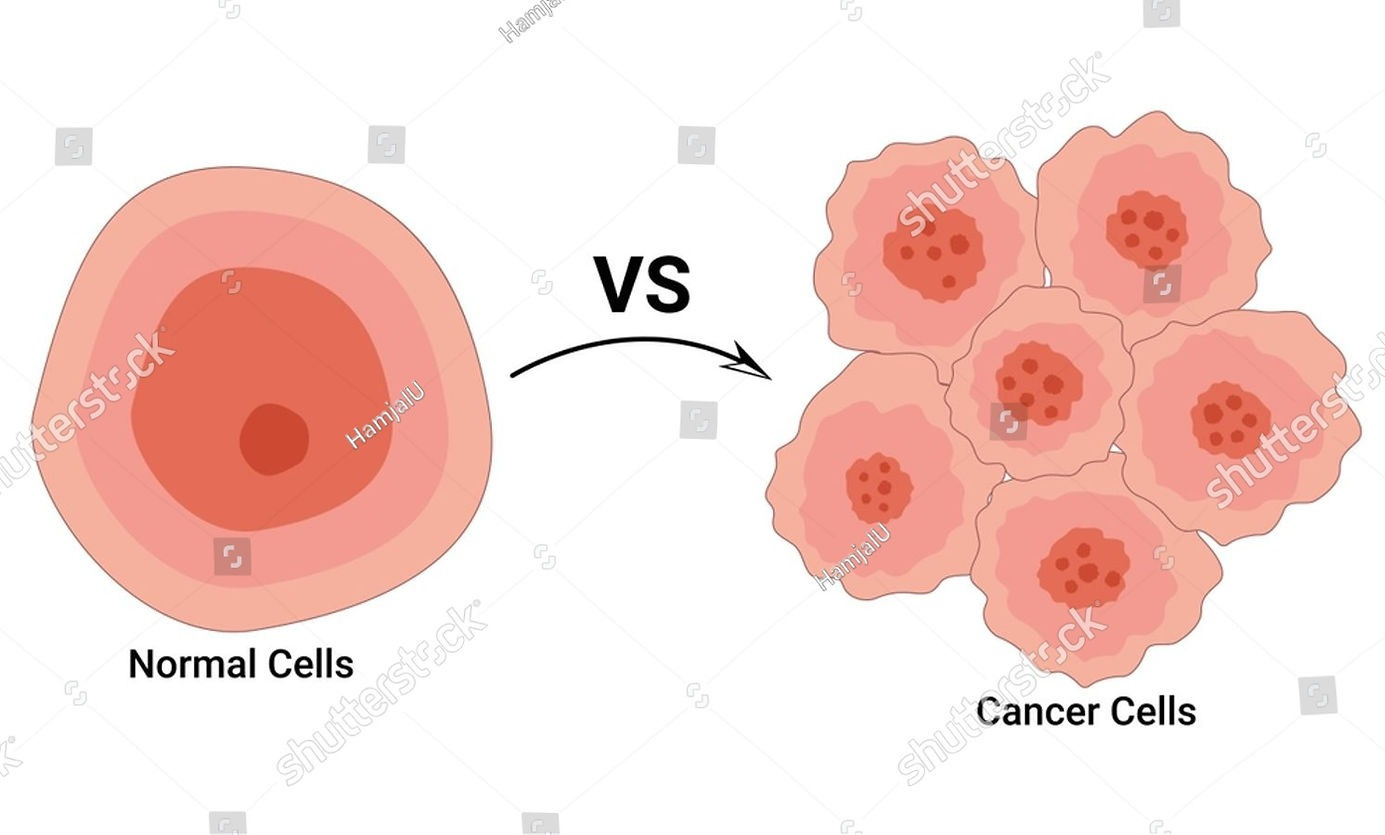
Normal cells and cancer cells are distinct in various fundamental characteristics that affect their behavior and function. Normal cells are typically organized functional units that grow, divide, and mature through regulated processes. They respond to signs that dictate when it grows or stops growing, allowing the development and repair of controlled tissues. These cells exhibit specific shapes and sizes that align with their roles in the body. On the other hand, cancer cells show unregulated growth that leads to their abnormal and often irregular morphology. This lack of control results in excessive cell division, forming tumors that can invade neighboring tissues. Research by Alibert et al. (2017) points out that cancer cells tend to be softer than normal cells, which correlates with their highest proliferation rates. Softer cells can deform more easily, allowing them to squeeze through barriers and grow at a controlled rate without control. Also, Lin et al. (2015) discuss how cancer cells lose their ability to feel rigidity in the surrounding environment, altering their mechanical phenotype. This loss of stiff detection contributes to their aggressive behavior and ability to proliferate in environments where normal cells would not survive. These differences in growth regulation, cellular structure,and mechanical properties are crucial to understanding how cancer cells behave compared to their normal colleagues., Cancer and normal cells behave very differently, especially when it comes to their motility and ability to invade other tissues. Normal cells generally maintain stable adhesion with each other and their surrounding environment. They effectively communicate to grow in a controlled way and generally remain within their designated areas. This stable behavior is essential for the proper functioning of tissues and organs in the body. On the other hand, cancer cells show a marked increase in motility and can invade surrounding tissues more easily.
According to Stuelten et al. (2018), cancer cells have several mechanisms that improve their ability to move and invade. For example, they often change their shape and use different proteins that allow them to squeeze through spaces between normal cells. This behavior change is related to several factors, including genetic mutations and tumor microenvironment, which provides signals that encourage the propagation of cancer. As cancer cells invade surrounding tissues, they can interrupt healthy function and create new areas of tumor growth, a process known as metastasis.
This improved characteristic of motility and invasion of cancer cells has serious implications for treatment. When cancer cells migrate away from the original tumor site, they can form secondary tumors in other parts of the body, which makes it difficult to eradicate the disease. In contrast, normal cells, with their stable and non-invasive behavior, do not represent such a threat to body integrity or function.
Cancer cells also alter their interactions with the extracellular matrix (ECM), which is a network of proteins and nutrients around the cells. In normal tissues, cells interact with the ECM regulated that helps maintain the structure of the tissue. However, cancer cells modify their way of interacting with the ECM, often decomposing it to create roads for invasion. They can secrete enzymes, such as the metalloproteinases of the matrix, which degrade the components of the ECM, thus facilitating their movement and invasion in other tissues.
Differences in behavior between normal and cancerous cells highlight the aggressive nature of cancer and its ability to escape normal regulatory mechanisms. Although normal cells are designed to work together, cancer cells break these connections and, instead, prioritize their own growth and survival, often at the expense of the surrounding healthy tissue. This behavior not only underlines the complexity of cancer progression but also emphasizes the need for directed therapies that can specifically address these invasive characteristics of cancer cells while saving normal cells. Understanding these differences is crucial in the development of effective treatment strategies aimed at controlling cancer and improving the results of patients., Cancer cells have significant metabolic differences compared to normal cells, which play a crucial role in their growth and behavior. A well-known phenomenon in cancer biology is the Warburg effect, identified for the first time by Otto Warburg in the 1920s. This effect describes how cancer cells prefer to produce energy, thanks to a process called aerobic glycolysis, even when oxygen is available. Unlike normal cells that effectively use oxygen to generate energy (ATP) by oxidative phosphorylation, cancer cells convert glucose into lactate. This transition to glycolysis quickly generates energy and supports rapid cell division, but it is less effective than oxidative phosphorylation.
Research by White et al. (2017) emphasizes how cancer cells also demonstrate the dynamics of deregulated pH, which further supports their proliferation. These cells often become more acidic due to the increase in lactate production and other metabolic by-products. This acidic environment can create a more favorable framework for cancer growth, as many cancer cells are capable of surviving and prospering under conditions that would be deleterious for normal cells. Normal cells, on the other hand, are better equipped to maintain the balance of pH and do not know the same degree of metabolic stress, which contributes to their stability and their normal growth models.
In addition, the alteration of the energy metabolism of cancer cells has an impact on their growth rates and the reactivity to growth factors. Cancer cells often have high levels of growth factors and track receptors that promote their survival and proliferation. They can also adapt to nutrient-poor environments more effectively than normal cells, thanks to their unique metabolic profiles. While normal cells require specific signals and conditions to develop and replicate, cancer cells can bypass these requirements, leading to uncontrolled growth. This incapacity for normal cells to modify in a similar way to their metabolic pathways leads to a more stable and regulated growth process compared to the chaotic and often unregulated growth observed in cancer cells.
Overall, the differences in metabolism between normal cells and cancer cells highlight the distinct strategies that these cells use to manage energy and support growth. The Warburg effect and the ability to thrive in difficult environments illustrate the adaptability of cancer cells, which can lead to more aggressive behaviors and challenges in treatment. Normal cells, with their stable metabolic processes, do not have the same advantages, resulting in a clear distinction in the way each type of cell reacts to various conditions and therapies. Differences between normal cells and cancer cells have significant implications for how each responds to treatment. Cancer cells usually exhibit non -non-controlled growth and proliferation due to mutations that interrupt normal regulatory pathways. For example, while normal cells are usually programmed to stop dividing after reaching a certain density or when their DNA is damaged, carcinogenic cells can avoid these checks. This ability allows them to grow without control and form tumors. These characteristics point out that cancer cells are less responsive to traditional treatments that target partition cells rapidly, such as chemotherapy, which acts effectively in normal division cells.
In addition, metabolic profiles from cancer cells often described by the Warburg effect show that they favor glycolysis for energy production, even in the presence of oxygen. On the other hand, normal cells usually use oxidative phosphorylation, especially when oxygen is available for more efficient ATP production. This change in metabolism not only provides cancer cells the construction blocks needed for rapid division but also has a unique vulnerability. Therapies that target specific metabolic pathways, such as glucose metabolism, can be effective against certain types of cancer cells, starving crucial resources.
Another significant difference is in the microenvironment, where there are both types of cells. Normal cells usually respond to environmental signs to maintain tissue homeostasis, while carcinogenic cells can alter their microenvironment to support their growth, creating conditions that favor their survival and treatment resistance. For example, tumors can create an immunosuppressive environment, making it difficult for immunological therapies difficult. Understanding how cancer cells modify their environment can lead to better therapeutic strategies that not only aim at carcinogenic cells but also improve the ability of the immune system to combat the tumor.
In addition, the heterogeneity of cancer cells within the tumors adds another layer of complexity in response to treatment. Different cancer cells may display varied characteristics and behaviors, even within a single tumor, which can lead to differential responses to medications. Some cells may be sensitive to certain treatments, while others are resistant, which usually results in treatment failure. Recognizing this heterogeneity is essential for the development of personalized medicine approaches that can most effectively achieve specific cell populations within a tumor.
Finally, change in the signal transduction pathways in cancer cells, such as overexpression of growth factor receptors or mutations in signaling molecules, also contribute to resistance to therapies. For example, many carcinogenic cells acquire mutations that allow them to ignore drug-driven roads, leading to therapeutic resistance. Strategies focused on accurately identifying these mutations and finding specific inhibitors are imperative to improve treatment results.
Understanding the distinct characteristics, metabolic behaviors, and processes of cancer cells compared to normal cells, researchers and doctors can better project treatment plans that exploit these differences. Directed therapies that meet specific mutations or metabolic needs of cancer cells have an exciting direction for future cancer treatments. Recognition of the exclusive biology of tumors compared to normal tissues is fundamental to advance effective therapeutic interventions and improve the results of patients in cancer treatment.
Citations:
Alibert C, Goud B, Manneville JB. Are cancer cells really softer than normal cells?. Biology of the Cell. 2017 May;109(5):167-89.
Lin HH, Lin HK, Lin IH, Chiou YW, Chen HW, Liu CY, Harn HI, Chiu WT, Wang YK, Shen MR, Tang MJ. Mechanical phenotype of cancer cells: cell softening and loss of stiffness sensing. Oncotarget. 2015 May 19;6(25):20946.
White KA, Grillo-Hill BK, Barber DL. Cancer cell behaviors mediated by dysregulated pH dynamics at a glance. Journal of cell science. 2017 Feb 15;130(4):663-9.
Stuelten CH, Parent CA, Montell DJ. Cell motility in cancer invasion and metastasis: insights from simple model organisms. Nature Reviews Cancer. 2018 May;18(5):296-312.